Foot-and-Mouth Disease Banner

PPR

Peste des petits ruminants(PPR) is a highly contagious, acute- to - subacute viral disease primarily affecting domestic sheep and goats.It is one of the most important transboundary diseases of small ruminants because outbreaks can result in high morbidity, mortality and substantial socioeconomic losses. PPR is caused by Peste des petits ruminants virus(PPRV), an enveloped, negative- sense, single-stranded RNA virus belonging to the genus Morbillivirus, family Paramyxoviridae.The disease is characterized principally by fever, oculo - nasal discharge, erosive stomatitis, respiratory involvement, diarrhoea, dehydration and wasting.Severe disease is particularly associated with immunologically naรฏve and highly susceptible populations.

Sheep and goat livestock
PPR

Peste des Petits Ruminants

A highly contagious viral disease of small ruminants

๐Ÿฆ 

Disease Overview

Understanding PPR

Peste des Petits Ruminants (PPR) is a highly contagious viral disease that primarily affects sheep and goats. The disease can spread rapidly within susceptible populations and may cause severe illness, production losses and high mortality, particularly in young and susceptible animals.

Key Point

Early detection, rapid reporting, vaccination and effective disease-control measures are essential to reduce PPR transmission and protect susceptible small ruminant populations.

Disease Intelligence

Explore the Key Questions

Select a question below to explore detailed information about the disease.

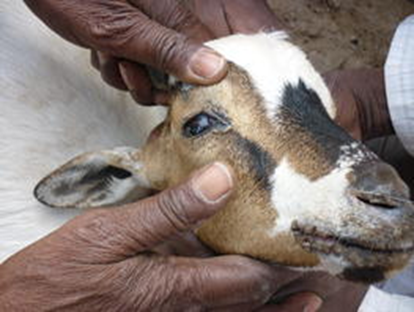
Clinical signs of PPR in small ruminants

Clinical Presentation

Signs & Symptoms

Recognize the Signs

Common Clinical Symptoms

โœ“High fever
โœ“Depression
โœ“Loss of appetite
โœ“Weakness
โœ“Conjunctivitis
โœ“Excessive tearing
โœ“Ocular discharge
โœ“Nasal discharge
โœ“Oral erosions
โœ“Necrotic lesions
โœ“Stomatitis
โœ“Excessive salivation
โœ“Coughing
โœ“Rapid breathing
โœ“Difficulty breathing
โœ“Pneumonia
โœ“Respiratory distress
โœ“Severe diarrhoea
โœ“Dehydration
โœ“Rapid weight loss
โœ“Emaciation
โœ“Secondary bacterial infections
โœ“Recumbency
โœ“Death

PPR Timeline

Follow the typical progression of Peste des Petits Ruminants (PPR) โ€” from initial exposure and incubation to clinical disease and transmission.

Key Takeaway

PPR can progress rapidly from exposure and incubation to fever, respiratory and oral lesions, diarrhoea and severe systemic disease. Early detection, prompt reporting, vaccination, movement control and effective biosecurity are important for reducing transmission and protecting susceptible sheep and goats.

Transmission & Risk Intelligence

Understand how PPR spreads between infected and susceptible sheep and goats, which transmission opportunities matter most and how animal movement, crowding and biosecurity can increase disease risk.

โ†“

PPR virus spreads primarily through close contact between infected and susceptible sheep and goats. Infected animals shed PPRV through respiratory, nasal, ocular and oral secretions.

โœ“Close contact between infected and susceptible animals
โœ“Exposure to respiratory secretions
โœ“Exposure to nasal and ocular discharge
โœ“Exposure to saliva and other infectious secretions
โ†“

Infected sheep and goats are the principal source of PPR virus. Animals may spread PPRV before obvious clinical disease is recognised, creating opportunities for transmission within susceptible groups.

โœ“Infected sheep and goats shed PPRV
โœ“Respiratory and nasal secretions can contain virus
โœ“Ocular and oral secretions can contribute to exposure
โœ“Infected animals can expose nearby susceptible animals
โ†“

Crowding and mixing animals from different flocks increase the frequency of close contact and create more opportunities for virus-containing secretions to reach susceptible animals.

โœ“High animal density increases contact opportunities
โœ“Mixing different flocks increases exposure
โœ“Communal grazing can increase animal contact
โœ“Shared watering points can bring animals together

Movement of infected or incubating animals can introduce PPRV into previously unaffected farms, villages and regions. Livestock markets and collection centres can further amplify contact and onward spread.

โœ“Movement of infected or incubating animals
โœ“Livestock markets and collection centres
โœ“Animal gatherings and shared transport
โœ“Introduction of PPRV into new areas
โœ“Strong biosecurity helps reduce transmission opportunities
โš ๏ธ

Transmission Risk

HOW DOES PPR SPREAD?

PPR spreads mainly through close contact between infected and susceptible sheep and goats. Respiratory, nasal, ocular and oral secretions create opportunities for exposure, while animal movement, crowding, livestock markets and weak biosecurity can amplify transmission.

5 KEY RISK FACTORS
๐Ÿ’ก

Key Intelligence

PPR spreads mainly through close contact between infected and susceptible sheep and goats. Animal movement, crowding, flock mixing and livestock markets can create additional opportunities for transmission, while low vaccination coverage and poor biosecurity can increase outbreak risk. Early detection, isolation, vaccination, movement management and strong farm biosecurity are central to PPR control.

PPR Vaccine Intelligence

Understand how PPR vaccines work, what vaccine types are used, how protection develops and which factors can influence vaccination success.

โ†“

Most currently used PPR vaccines are live attenuated PPRV vaccines. The attenuated virus replicates sufficiently to stimulate the immune system without causing the severe disease associated with virulent PPRV.

โœ“Live attenuated PPRV vaccine
โœ“Recognition of viral antigens
โœ“Activation of B cells + T cells
โœ“PPRV-specific antibodies + cellular immunity
โœ“Immunological memory
โœ“Protection against virulent PPRV
โ†“

The major vaccines used for the control of Peste des Petits Ruminants (PPR) are mainly live-attenuated vaccines. The Nigeria 75/1 and Sungri/96 vaccines are the two most widely used vaccines in PPR control programmes.

โœ“Nigeria 75/1: A live-attenuated vaccine belonging to Lineage II. It is widely used internationally and is an important vaccine for PPR control.
โœ“Sungri/96: A live-attenuated vaccine belonging to Lineage IV. It is widely used, particularly in India, for PPR prevention and control.
โœ“Arasur 87: Another live-attenuated vaccine with more limited use compared with Nigeria 75/1 and Sungri/96.

PPRV has one recognized serotype but four genetic lineages (I, II, III and IV). These genetic differences do not represent separate serotypes. Studies have shown that current live-attenuated vaccines can provide broad protection across different PPRV lineages

โœ“Cross-lineage protection: Nigeria 75/1 and Sungri/96 have demonstrated complete clinical protection against virulent viruses representing all four genetic lineages.
โœ“Broad protection:
โœ“Lineage I + II + III + IV โ†’ Current live-attenuated PPR vaccines โ†’ Broad cross-protection
โœ“Immune response: Nigeria 75/1 has been associated with stronger antibody responses, while Sungri/96 has shown more pronounced cellular immune responses.
โœ“Overall: Despite differences in immune profiles, both vaccines provide strong clinical protection across PPRV lineages.
โš ๏ธ

Vaccine Performance

WHY CAN VACCINATION FAIL?

PPR vaccines are highly effective, and current live-attenuated vaccines provide broad protection against the recognized PPRV lineages. Therefore, PPR detected after vaccination should not automatically be interpreted as vaccine failure. Investigation should distinguish failure of the vaccine product from failure of vaccine delivery, inadequate immunity, or infection occurring before protective immunity developed.

6 KEY FACTORS

Key Factors

Select a factor to explore its details.

๐Ÿ’ก

Key Intelligence

PPR vaccination can provide strong protection when vaccines are properly stored, prepared and administered and when campaigns achieve adequate coverage. Effective PPR control also depends on surveillance, animal movement management, biosecurity and timely vaccination strategies.

Vaccination Case Studies

Explore representative PPR field scenarios showing how vaccination coverage, cold-chain management, administration, animal factors and disease-control programmes can influence protection.

Explore Case Studies

๐Ÿ”ฌ

Case Study Insight

What These Case Studies Tell Us

01
๐ŸŸข

Vaccine mismatch

Not the primary concern

Current evidence supports broad cross-lineage protection.

02
๐Ÿ”ด

Vaccine quality

Critical

Cold-chain and vaccine handling can determine whether adequate vaccine potency reaches the animal.

03
๐Ÿ”ด

Vaccination timing

Critical

Vaccination cannot reliably prevent disease from an infection that was already established before protective immunity developed.

04
๐Ÿ”ด

Population coverage

Critical

A highly effective vaccine cannot eliminate transmission if large numbers of susceptible animals remain unvaccinated.

05
๐ŸŸ 

Host factors

Important

Age, maternal antibodies, nutritional status and concurrent disease can influence immune responses.

๐ŸŒ

Part 08 โ€ข Global Disease Surveillance

Global PPR Outbreaks

Explore the major PPR events that shaped modern prevention, control and eradication strategies.

Surveillance Dashboard

Global PPR Situation Overview

1 Active6 Resolved7 Events Tracked

Global Disease Timeline

Major PPR Events

Key historical events that shaped the understanding, control and surveillance of PPR.

Explore Timeline

Surveillance Records

Regional PPR Events

7 records shown

๐ŸŒ

Global Intelligence

What the Global PPR History Tells Us

PPR outbreaks are strongly influenced by animal movement, susceptible livestock populations, regional connectivity, surveillance capacity and vaccination coverage. Sustained vaccination, population-level immunity, early detection and coordinated movement management are essential components of effective PPR control.

Global PPR News

Track the latest developments in PPR outbreaks, vaccination, disease-control policy, eradication programmes and scientific research around the world.

Feed Status

Monitoring Active

Featured๐ŸŒ

Outbreak

Global PPR Intelligence

๐ŸŒ Europeโ€ข29 Jun 2026
Latest Update29 Jun 2026

Europe strengthens regional cooperation against PPR

WOAH's second GF-TADs Standing Group of Experts meeting for Europe reviewed the evolving PPR epidemiological situation and strengthened regional preparedness, surveillance and coordinated response. Illegal animal movements were highlighted as an important transmission risk.

๐ŸŒ EuropeOutbreaks

Latest

Latest Updates

6 Stories
๐ŸŒOutbreaks
๐ŸŒ Europeโ€ข29 Jun 2026

Europe strengthens regional cooperation against PPR

WOAH's second GF-TADs Standing Group of Experts meeting for Europe reviewed the evolving PPR epidemiological situation and strengthened regional preparedness, surveillance and coordinated response. Illegal animal movements were highlighted as an important transmission risk.

PPR Intelligence
๐Ÿ‡ฎ๐Ÿ‡ณPolicy
๐ŸŒ Indiaโ€ข24 Apr 2026

Gangetic region advances cross-border PPR eradication cooperation

FAO reported that India, Bangladesh, Bhutan and Nepal met in New Delhi from 21โ€“23 April 2026 to strengthen coordinated PPR eradication efforts, including harmonised vaccination, surveillance and cross-border disease control.

PPR Intelligence
๐Ÿ’‰Vaccines
๐ŸŒ Indiaโ€ข24 Apr 2026

Regional vaccination strategy highlighted for PPR control

The Gangetic regional workshop discussed harmonised vaccination strategies, including the use of the PPRV Lineage IV (Sungri strain) vaccine, alongside development of DIVA vaccines and thermo-tolerant formulations.

PPR Intelligence
๐Ÿ”ฌResearch
๐ŸŒ Ethiopiaโ€ข27 Feb 2026

Study examines vaccination trends and operational challenges

A 2026 Scientific Reports study evaluated PPR vaccination trends and operational challenges in Ethiopia, including factors influencing vaccination performance and eradication efforts.

PPR Intelligence
๐ŸŽฏPolicy
๐ŸŒ Globalโ€ข2026

PPR eradication remains targeted for 2030

FAO and WOAH continue to coordinate the global PPR eradication programme, with vaccination, surveillance, diagnostics, movement management and strengthened veterinary services forming important elements of the strategy.

PPR Intelligence
๐ŸงฌResearch
๐ŸŒ Globalโ€ข2026

Surveillance and diagnostic capacity remain critical

Global PPR eradication efforts continue to emphasise early detection, laboratory diagnosis, epidemiological surveillance, genetic information and coordinated reporting to support evidence-based disease control.

PPR Intelligence
โ„น๏ธ

Intelligence Feed

News content should be connected to verified veterinary authorities, international organisations, research institutions and trusted disease-surveillance sources. Dates, countries, outbreak status and disease information should be refreshed when new verified updates become available.

PPR By The Numbers

Key facts and figures that explain how Peste des Petits Ruminants spreads, affects small ruminants and creates livestock production risks.

๐Ÿ”„
01
Rapid

Transmission

PPR is a highly contagious viral disease that can spread rapidly among susceptible sheep and goats, mainly through close contact and infectious respiratory and oral secretions.

โฑ๏ธ
02
3โ€“10days

Clinical Onset

Clinical signs commonly appear around 3โ€“10 days after infection, although the incubation period can vary. For disease-control purposes, WOAH uses 21 days as the official incubation period.

๐Ÿงฌ
03
4lineages

Virus Lineages

PPR virus is classified into four recognised genetic lineages: Lineage I, Lineage II, Lineage III and Lineage IV.

๐Ÿ
04
Sheep & Goats

Main Hosts

Domestic sheep and goats are the principal epidemiologically important hosts of PPR. Other susceptible ruminants, including some wild species, can also be affected.

๐Ÿ“‰
05
Up to 70%mortality

Potential Impact

PPR can cause severe disease and high mortality in susceptible populations. Following introduction into a susceptible herd, very high infection rates and mortality can occur.

๐Ÿ”„

Transmission

How quickly can PPR spread?

PPR is highly contagious and spreads mainly through close contact between infected and susceptible sheep and goats. Respiratory secretions, nasal and ocular discharge, saliva and other infectious materials can facilitate transmission, particularly where animals are crowded or frequently moved.

๐Ÿ

Infected Animal

๐Ÿ’จ

Respiratory Secretions

๐Ÿค

Close Contact

๐Ÿšš

Animal Movement

๐Ÿ

New Host

Economic & Farm Impact

Why PPR matters

๐Ÿ“Š
๐Ÿ

Animal Productivity

PPR can reduce feed intake, growth, weight gain, milk production and overall productivity in affected sheep and goat populations.

โ˜ ๏ธ

Morbidity & Mortality

Severe PPR outbreaks can cause substantial illness and mortality, particularly among young and susceptible animals.

๐Ÿ’ฐ

Economic Losses

Animal deaths, reduced production, treatment, vaccination and disease-control measures can create significant financial losses for farmers and livestock-dependent communities.

๐ŸŒ

Trade & Movement Impact

PPR outbreaks can lead to animal movement restrictions, disrupt livestock markets and affect regional livestock production and trade.

Disease Drivers

Major PPR Risk Factors

PPR transmission is influenced by close animal contact, respiratory exposure, animal movement, population density, livestock markets, gatherings and gaps in farm-level biosecurity.

Contact โ€ข Movement โ€ข Density โ€ข Markets โ€ข Biosecurity
ContactMajor Risk

Close contact between infected and susceptible sheep and goats is a major route of PPR transmission.

MovementHigh Risk

Movement of infected, exposed or incubating animals can introduce PPRV into previously unaffected areas.

DensityRisk Factor

High animal density and crowding increase opportunities for close contact and transmission among susceptible animals.

MarketsRisk Factor

Livestock markets, gatherings and shared transport can bring animals from different locations into close contact and increase transmission opportunities.

BiosecurityRisk Factor

Gaps in animal isolation, hygiene, equipment management and movement control can increase the risk of PPR introduction and spread.

C

Close Contact

Close contact between infected and susceptible sheep or goats facilitates PPR transmission through infectious respiratory, nasal, ocular and oral secretions.

M

Animal Movement

Movement of infected or incubating animals can introduce PPRV into previously unaffected farms, markets and regions.

B

Biosecurity

Animal isolation, hygiene, movement management, equipment control and appropriate farm biosecurity can help reduce PPR introduction and spread.

โšก

Rapid Transmission

PPR can spread quickly among susceptible sheep and goats, making early detection and rapid control measures essential.

๐Ÿ’‰

Vaccination Matters

High vaccination coverage, correct vaccine handling and effective disease surveillance are important components of PPR prevention and control.

โš ๏ธ

High Disease Impact

PPR can cause severe clinical disease, mortality, reduced productivity, livestock movement restrictions and significant economic losses.

โ„น๏ธ

Numerical ranges shown here are general disease-intelligence indicators. Clinical onset, incubation, transmission efficiency, disease severity and mortality can vary with animal age, immune status, virus characteristics, population susceptibility and epidemiological conditions.

Research & Evidence

Explore scientific literature, international surveillance, technical reports and research evidence related to Peste des Petits Ruminants (PPR).

๐Ÿ”ฌ

Evidence Base

Research โ€ข Surveillance โ€ข Reports

๐Ÿ“„Scientific Papers
๐ŸŒWOAH
๐ŸŒพFAO
๐Ÿ”ฌResearch
๐Ÿ“ŠReports
01
๐Ÿ“š

Scientific Literature

Peer-reviewed research provides evidence on PPR virus biology, epidemiology, genetic diversity, vaccines, diagnostics and disease control.

02
๐ŸŒ

International Surveillance

International organisations provide structured surveillance, outbreak information, epidemiological data and progress towards PPR control and eradication.

03
๐Ÿ“Š

Technical Reports

Technical reports translate surveillance findings and scientific evidence into practical vaccination, prevention and disease-control strategies.

Scientific LiteratureHighScientific Papers
๐Ÿ“„

Peste des petits ruminants virus infection of small ruminants: a comprehensive review

Kumar N, Maherchandani S, Kashyap SK, et al.

Viruses. 2014; 6(6):2287โ€“2327.

A comprehensive review covering PPR disease overview, pathogenesis, transmission, clinical signs, diagnosis, epidemiology and vaccination.

๐ŸŽฏ

Useful For

Disease overview โ€ข Pathogenesis โ€ข Transmission โ€ข Clinical signs โ€ข Diagnosis โ€ข Epidemiology โ€ข Vaccination

2014Explore
Scientific LiteratureHighScientific Papers
๐Ÿ“„

Diagnosis and control of peste des petits ruminants: a comprehensive review

Balamurugan V, Hemadri D, Gajendragad MR, Singh RK, Rahman H.

VirusDisease. 2014; 25(1):39โ€“56.

Reviews diagnostic approaches, epidemiology, disease control, vaccination and outbreak management for PPR.

๐ŸŽฏ

Useful For

Diagnosis โ€ข Epidemiology โ€ข Disease control โ€ข Vaccination โ€ข Outbreak management

2014Explore
Scientific LiteratureHighScientific Papers
๐Ÿ’‰

Vaccines against peste des petits ruminants virus

Sen A, Saravanan P, Balamurugan V, et al.

Expert Review of Vaccines. 2010; 9(7):785โ€“796.

DOI: 10.1586/erv.10.74

Reviews available PPR vaccine approaches, vaccine efficacy, immune responses and developments in vaccine technology.

๐ŸŽฏ

Useful For

Vaccine types โ€ข Vaccine efficacy โ€ข Immune response โ€ข Vaccine development

2010Explore
Scientific LiteratureHighScientific Papers
๐Ÿ’‰

Advances in peste des petits ruminants vaccines

Kumar N, Barua S, Riyesh T, Tripathi BN.

Veterinary Microbiology. 2017; 206:91โ€“101.

Discusses advances in PPR vaccine development, including live-attenuated, recombinant and thermostable vaccine approaches.

๐ŸŽฏ

Useful For

Live-attenuated vaccines โ€ข Recombinant vaccines โ€ข Thermostability โ€ข DIVA approaches โ€ข Vaccine limitations

2017Explore
Scientific LiteratureHighScientific Papers
๐Ÿงฌ

Development of vaccines for prevention of peste-des-petits-ruminants virus infection

Fan X, et al.

Microbial Pathogenesis. 2020; 143:104045.

DOI: 10.1016/j.micpath.2020.104045

Reviews conventional, homologous and recombinant vaccine approaches and future strategies for PPR prevention.

๐ŸŽฏ

Useful For

Conventional vaccines โ€ข Homologous vaccines โ€ข Recombinant vaccine development โ€ข Future vaccine strategies

2020Explore
Scientific LiteratureHighScientific Papers
๐Ÿ‡ฎ๐Ÿ‡ณ

Peste des petits ruminants vaccine and vaccination in India: sharing experience with disease endemic countries

Singh RP, Bandyopadhyay SK.

VirusDisease. 2015; 26(4):215โ€“224.

DOI: 10.1007/s13337-015-0281-9

Documents India's experience with PPR mass vaccination, field effectiveness, surveillance and national vaccination programmes.

๐ŸŽฏ

Useful For

India โ€ข Mass vaccination โ€ข Field effectiveness โ€ข Vaccination programmes โ€ข Outbreak reduction

๐Ÿ’ก

Additional Note

The study reported more than 90% reduction in reported outbreaks in Andhra Pradesh and Karnataka and more than 75% reduction nationally during the period evaluated.

2015Explore
FAO & WOAHHighFAO
๐ŸŒพ

Global Strategy for the Control and Eradication of Peste des Petits Ruminants

FAO & WOAH

Global Strategy for the Control and Eradication of PPR. 2015.

A foundational international strategy establishing the framework for global PPR control and eradication.

๐ŸŽฏ

Useful For

Global eradication strategy โ€ข Vaccination โ€ข Surveillance โ€ข Epidemiological assessment โ€ข Progressive control โ€ข Eradication framework

2015Explore
FAOHighFAO
๐ŸŒพ

Peste des Petits Ruminants Global Eradication Programme (PPR-GEP)

FAO

PPR Global Eradication Programme.

The PPR-GEP provides an implementation framework supporting the global strategy and the objective of PPR eradication.

๐ŸŽฏ

Useful For

Global programme โ€ข Eradication pathway โ€ข Country implementation โ€ข Surveillance โ€ข Vaccination

Global ProgrammeExplore
FAOHighFAO
๐ŸŒ

PPR Background and Global Impact

FAO

PPR Background and Global Impact.

Provides background information on PPR distribution, global disease burden and the importance of small ruminants to rural livelihoods.

๐ŸŽฏ

Useful For

Global distribution โ€ข PPR burden โ€ข Small-ruminant populations โ€ข Livelihood impact โ€ข Eradication

๐Ÿ’ก

Additional Note

FAO information highlights approximately 1.7 billion sheep and goats at risk and around 300 million rural families whose livelihoods are linked to these animals.

Global EvidenceExplore
WOAHHighWOAH
๐Ÿ›๏ธ

WOAH Terrestrial Animal Health Code โ€” Chapter 14.7

World Organisation for Animal Health (WOAH)

Chapter 14.7 โ€” Infection with Peste des Petits Ruminants Virus.

A primary technical reference covering susceptible species, definitions of PPR infection, epidemiological requirements, surveillance, disease status and control considerations.

๐ŸŽฏ

Useful For

Susceptible species โ€ข PPR infection definition โ€ข Epidemiology โ€ข Surveillance โ€ข International disease status โ€ข Control and eradication

Technical CodeExplore
WOAHHighWOAH
๐Ÿ”ฌ

WOAH Terrestrial Manual โ€” Peste des Petits Ruminants

World Organisation for Animal Health (WOAH)

Peste des Petits Ruminants โ€” Infection with PPRV.

Technical guidance covering laboratory diagnosis, sample collection, virus detection, serology, surveillance and vaccine-related diagnostic considerations.

๐ŸŽฏ

Useful For

Laboratory diagnosis โ€ข Sample collection โ€ข Virus detection โ€ข Serology โ€ข Surveillance โ€ข Vaccine-related diagnostics

Technical ManualExplore
WOAHHighWOAH
๐ŸฆŒ

Guidelines for the Control and Prevention of PPR in Wildlife Populations

World Organisation for Animal Health (WOAH)

PPR Wildlife Guidelines. 2021.

Provides guidance on PPR surveillance and control at the wildlifeโ€“livestock interface and considers susceptible wild ruminant populations.

๐ŸŽฏ

Useful For

Wildlife surveillance โ€ข Wildlifeโ€“livestock interface โ€ข Susceptible wild ruminants โ€ข Spillover risk โ€ข Eradication planning

2021Explore
WOAHHighWOAH
๐Ÿ“Š

WOAH Global Epidemiological Evidence

World Organisation for Animal Health (WOAH)

WOAH PPR Technical and Surveillance Resources.

WOAH provides international surveillance and disease-status information through its PPR technical resources, including the Terrestrial Code, Terrestrial Manual and official disease-status framework.

๐ŸŽฏ

Useful For

Disease surveillance โ€ข Outbreak reporting โ€ข Disease status โ€ข Epidemiology โ€ข Geographic distribution

SurveillanceExplore
India ResearchHighResearch
๐Ÿ‡ฎ๐Ÿ‡ณ

India Research โ€” PPR Vaccine and Vaccination Experience

Singh RP, Bandyopadhyay SK.

Peste des petits ruminants vaccine and vaccination in India: sharing experience with disease endemic countries.

India-specific evidence documenting mass vaccination, vaccine deployment, PPR surveillance, disease reduction and national control strategy.

๐ŸŽฏ

Useful For

Mass vaccination โ€ข Vaccine deployment โ€ข PPR surveillance โ€ข Disease reduction โ€ข National control strategy

2015Explore
Technical ReportsModerateReports
๐Ÿ“Š

PPR Epidemiology and Socioeconomic Impact

International PPR Technical Evidence

Technical and epidemiological evidence on PPR.

Disease reports assess the effects of PPR on small-ruminant health, production, farmer livelihoods, animal movement and livestock-dependent economies.

๐ŸŽฏ

Useful For

Epidemiology โ€ข Production losses โ€ข Farmer livelihoods โ€ข Animal movement โ€ข Economic impact

Evidence ReviewExplore
Scientific LiteratureHighResearch
๐Ÿงฌ

PPR Genetic Lineage Surveillance

Scientific Research Literature

Molecular and epidemiological research on PPR virus.

Molecular surveillance helps identify the four recognised PPR virus genetic lineages and monitor their geographic distribution and epidemiological significance.

๐ŸŽฏ

Useful For

Genetic diversity โ€ข Molecular surveillance โ€ข Lineage identification โ€ข Geographic distribution โ€ข Epidemiology

Molecular ResearchExplore

Evidence Framework

How to interpret PPR evidence

Different evidence sources answer different questions. Scientific studies help explain disease mechanisms, while surveillance data and official reports provide information about disease occurrence, distribution and control.

01

Peer-reviewed research

PPR biology, epidemiology, vaccines, diagnostics and genetic diversity

02

Surveillance data

Outbreaks, genetic lineages and geographic disease activity

03

Official guidance

PPR prevention, vaccination, surveillance and eradication recommendations

04

Field reports

Real-world observations, outbreak investigations and operational experience

๐Ÿ”ฌ

Evidence First

Reliable PPR intelligence should be based on traceable, scientifically credible and appropriately interpreted sources.

Scientific Evidence

HIGH

Official Surveillance

HIGH

Field Reports

VARIABLE
โ„น๏ธ

Source Integrity

Research summaries should always be linked to the original publication, official surveillance record or technical report. Evidence strength indicates the quality and relevance of the available evidence and should not be interpreted as a guarantee of vaccine or treatment effectiveness.